
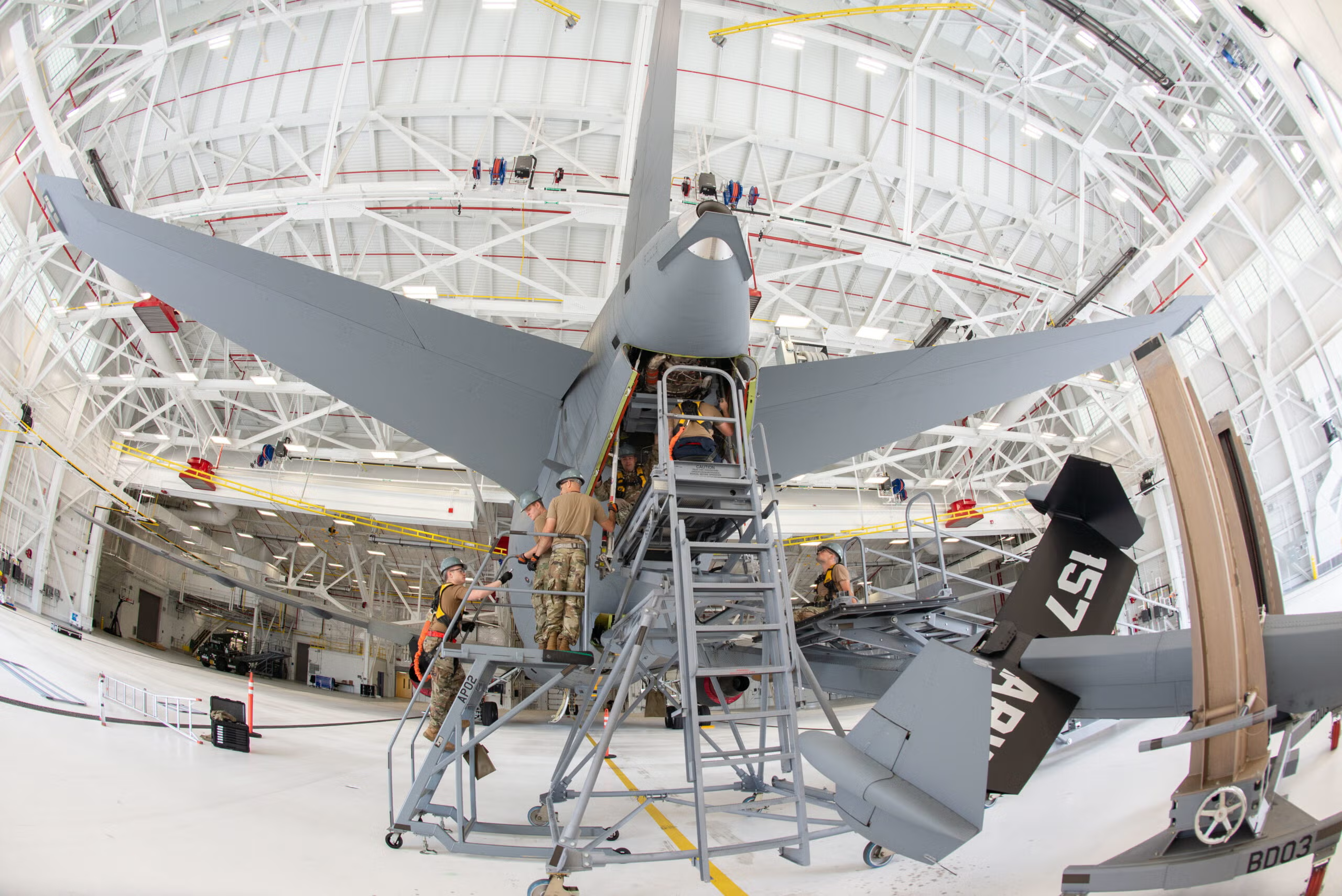
Introduction to the KC-46 Pegasus
The KC-46 Pegasus is meant to be the next-generation backbone of the U.S. Air Force’s aerial refueling fleet. On paper, it looks like a highly capable aircraft designed for modern warfare. In reality, it has faced several technical challenges, and one of the most discussed problems involves its Auxiliary Power Unit, commonly called the APU. While the APU might seem like a minor component, its issues have had real-world consequences for operations, maintenance, and confidence in the aircraft.
So why does the APU matter so much, and what exactly has gone wrong? Let’s break it down in a simple, human way.
What Is the KC-46 Pegasus?
The KC-46 Pegasus is a military aerial refueling and transport aircraft developed by Boeing and based on the commercial Boeing 767 platform. Its main job is to refuel other aircraft mid-air, but it is also capable of carrying cargo, passengers, and medical evacuation equipment.
The goal of the KC-46 program was to replace the aging KC-135 fleet, some of which have been flying since the 1950s. That alone shows how critical it is for the Pegasus to be reliable and dependable.
Role of the KC-46 in the U.S. Air Force
The KC-46 is a force multiplier. Fighters, bombers, and transport aircraft rely on it to extend their range and stay in the air longer. If the tanker has issues, those issues ripple across multiple missions. Even a support-system problem like an APU malfunction can affect readiness, scheduling, and operational flexibility.
Understanding the APU in Military Aircraft
Before diving deeper into the issues, it helps to understand what an APU actually does and why it is so important.
What Is an Auxiliary Power Unit (APU)?
An APU is a small turbine engine, usually located in the tail of the aircraft. It provides electrical power and compressed air when the main engines are not running or when additional power is needed.
You can think of it like a backup generator for a building. You might not pay much attention to it when everything is working, but when you need it, it has to perform perfectly.
Why the APU Is Critical for the KC-46
Ground Operations
On the ground, the APU allows the KC-46 to power avionics, lighting, and environmental control systems without running the main engines. This saves fuel, reduces wear, and allows quicker and safer ground operations, especially at remote or deployed locations.
In-Flight Backup Power
While not the primary power source in flight, the APU adds another layer of redundancy. In certain abnormal situations, having a reliable APU increases overall system resilience and safety.
Overview of KC-46 Pegasus APU Issues
The APU issues did not come as a complete surprise. They emerged during testing and early operational use, raising concerns among engineers, maintainers, and Air Force leadership.
When Were the APU Issues First Identified?
The problems became noticeable during developmental testing and continued into early operational evaluations. Crews reported unexpected APU shutdowns, abnormal temperature readings, and inconsistent performance under certain conditions.
How Widespread Are the Problems?
These were not one-off incidents. Multiple aircraft experienced similar APU behavior, which suggested a systemic issue rather than isolated failures. That made the problem more serious and harder to ignore.
Technical Nature of the APU Problems
The KC-46 APU issues are not caused by a single fault. Instead, they involve a mix of technical challenges.
APU Shutdown and Overheating Concerns
One of the main problems has been uncommanded APU shutdowns. In some cases, the APU shut down due to overheating or sensor readings that exceeded limits, even when external conditions did not seem extreme.
An APU shutting down unexpectedly is a bit like your car stalling at a stoplight. You may be able to recover, but it creates uncertainty and risk.
Software vs Hardware-Related Issues
Some of the problems appear to be linked to software logic that controls how the APU reacts to temperature and load conditions. Other issues point to hardware components struggling under operational stress. When software and hardware problems overlap, troubleshooting becomes much more complex.
Environmental and Operational Stress Factors
Military aircraft operate in far harsher environments than commercial jets. Heat, cold, dust, high usage rates, and rapid mission turnaround can expose weaknesses that might not show up in controlled testing environments.
Root Causes Behind KC-46 APU Issues
Finding the root cause is the key to a lasting fix.
Design and Integration Challenges
Although the KC-46 is based on a commercial aircraft, its military systems place higher and more varied demands on the APU. Integrating those systems without overloading the APU has proven more challenging than expected.
Supplier and Manufacturing Factors
APUs are built by specialized suppliers. Small inconsistencies in manufacturing or component quality can become more noticeable when an entire fleet operates under demanding conditions.
Testing and Validation Gaps
Some experts believe that real-world operational use exposed gaps in testing. Lab tests and simulations are valuable, but they cannot perfectly replicate long-term operational stress.
Operational Impact on the U.S. Air Force
APU issues affect more than just engineering teams.
Mission Readiness and Availability
When an APU is unreliable, aircraft availability can suffer. Missions may be delayed, or aircraft may require additional support equipment, reducing flexibility.
Maintenance Burden and Downtime
Maintenance crews spend extra time inspecting, troubleshooting, and repairing APUs. This increases workload and keeps aircraft out of service longer than planned.
Operational Workarounds Used by Crews
To keep operations moving, crews often rely on external ground power units or adjusted procedures. These workarounds help in the short term but are not ideal long-term solutions.
Safety Implications of APU Failures
Safety is always the top priority in military aviation.
Ground Safety Risks
Unexpected APU shutdowns on the ground can affect cooling, avionics, and other systems, increasing the chance of delays or maintenance errors.
In-Flight Risk Assessment
Even with multiple layers of redundancy, any loss of backup power increases risk. The Air Force treats even small increases in risk very seriously.
Emergency Power Reliability
In emergency scenarios, every backup system matters. An unreliable APU reduces confidence in the aircraft’s ability to handle worst-case situations.
Boeing’s Response to the APU Issues
Boeing has taken steps to address the problem.
Engineering Fixes and Modifications
Hardware changes, improved cooling solutions, and component upgrades have been developed to reduce the likelihood of shutdowns and overheating.
Software Updates and Monitoring Enhancements
Software updates have refined fault detection logic, helping prevent unnecessary shutdowns while still protecting the system.
Collaboration With the U.S. Air Force
Boeing has worked closely with the Air Force, using real operational feedback to guide improvements and updates.
U.S. Air Force Actions and Oversight
The Air Force has maintained close oversight throughout the process.
Air Force Evaluations and Reports
Regular evaluations track reliability trends, failure rates, and mission impact to ensure progress is real and measurable.
Temporary Restrictions or Mitigations
In some cases, temporary guidance or operational limits were used to manage risk while fixes were implemented.
Long-Term Reliability Goals
The ultimate goal is decades of dependable service without recurring issues.
Comparison With APU Issues in Other Aircraft
The KC-46 is not the only aircraft to face APU challenges.
Lessons From Commercial Aviation
Commercial aviation has dealt with similar issues in the past, many of which were resolved through incremental design improvements and software refinements.
How Military Requirements Increase Complexity
Higher power demands, redundancy requirements, and harsh operating environments make military APU design more complex than commercial equivalents.
Cost and Programmatic Impact
APU issues also affect the KC-46 program at a higher level.
Financial Implications for the KC-46 Program
Fixing the issues costs money. While Boeing has absorbed many of the costs, delays and modifications still influence the overall program.
Schedule Delays and Program Reputation
Each technical problem adds scrutiny and affects confidence in the program among decision-makers and the public.
Progress and Current Status of APU Fixes
So where does the program stand today?
Improvements Observed So Far
Recent updates have shown improved APU reliability, with fewer unexpected shutdowns reported.
Remaining Challenges
Long-term data collection is still ongoing to confirm that the fixes will hold up over years of service.
Future Outlook for KC-46 Pegasus Reliability
The outlook is cautious but positive.
Expected Long-Term Performance
With continued updates and oversight, the APU is expected to meet operational demands more consistently.
Lessons for Future Tanker Programs
The KC-46 experience highlights the importance of realistic testing, early operational feedback, and flexible system design.
Conclusion
The KC-46 Pegasus APU issues may sound technical, but they reveal a much bigger story about modern military aircraft development. A single support system can affect safety, readiness, and mission success. While the APU problems have been real and disruptive, steady progress shows that they are being addressed. With continued collaboration between Boeing and the U.S. Air Force, the KC-46 is moving closer to fulfilling its role as a reliable next-generation tanker.
FAQs
What is the main APU issue in the KC-46 Pegasus?
The primary issue involves unexpected shutdowns and overheating, linked to both software behavior and hardware performance.
Does the APU problem ground the aircraft?
Not always, but it can limit operations or require additional ground support.
Is the KC-46 safe to fly despite APU issues?
Yes, the aircraft has multiple redundancies, and operations are guided by strict safety assessments.
Has Boeing fully fixed the KC-46 APU problem?
Improvements have been made, but long-term monitoring is still ongoing.
How does the APU issue affect refueling missions?
It can reduce flexibility and increase turnaround time, especially during ground operations.